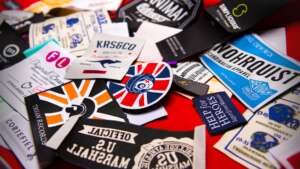
You are probably already convinced of the advantages of custom embroidered patches if you are reading this. However, you are now perplexed by all of the patch alternatives on the market. Like most people, you might be having trouble deciding between woven patch and embroidered patches.
So to help you make the right choice, we are sharing with you the differences between these two patch types so that you can decide based on your requirements.
So let's get started with the basics.
<strong>The Different Types Of Patches Out There</strong>
<strong>Weaving Vs. Embroidery</strong>
Although a lot of people use these terms interchangeably, these are two different techniques. With embroidery, a pattern gets stitched onto a base material, whereas with weaving, the design is a part of the material itself. Embroidery is done either by hand or using a sewing machine, whereas, with weaving, we need a loom, either manual or mechanical.
For an embroidered patch, various stitching techniques may be utilized. It is understandable that various design elements are typically represented by different types of stitching. But most businesses will ask you to choose between one of three types of <a href="https://masterscustompatches.com/custom-patches/woven-patches/">woven patches</a>, so you should have some idea about them:
<strong>1. Tafetta</strong>
Taffeta's grainy appearance makes it unsuitable for incorporating fine details or vibrant colors into the artwork. But if you want to project a more retro vibe, it's ideal. Additionally, it is the most cost-effective choice.
Bonus advice: Tafetta is not a comfortable fabric, so avoid using it for patches that will come in contact with the skin, whether they are woven or embroidered.
<strong>2. Satin</strong>
Satin woven patches should be employed if you want to project a more opulent appearance and if the fabric is supposed to touch the skin.
<strong>3. Damask</strong>
<a href="https://www.siennapacific.com/clothing-labels/custom-woven-labels/taffeta-vs-damask.html">Damask woven patches</a> are made up of polyester yarns and hence are very sturdy. They won't degrade and can endure numerous washings. They are ideal for frequently cleaned clothing because of their resilience.
Now that the difference between embroidered patches and woven patches is clear, let's see how these two perform based on different features.
<strong>4. Texture</strong>
Since embroidered patterns are sewn into a backing cloth, the elevated threads are easily noticeable, giving the label a three-dimensional appearance. But because there are fewer layers of cloth with a woven label, it is flatter; the weave is<em> literally</em> your fabric!